


Our commitment is simple: no shortcutting. We operate a completely transparent logistics flow. You are kept updated at every phase of the process. If a production delay occurs at the mill level due to monsoon retting bottlenecks, you are informed immediately — not when the container fails to book. Sourcing high-quality agricultural fibre demands attention to detail, and our workflow is designed to ensure peace of mind.
— Our workflow
Mills matched to inquiry.
Prices matched.
Samples after contract.
Shipped without surprises.
Five steps between your first message and the container at your destination port. Photographed on the warehouse floor, not in a brochure.
- 01
01 — Inquire
Tell us what you need.
Product, weight per unit or grade, width, treatment, destination port, container target. WhatsApp, email or phone — whichever lands fastest for your team.
If you're not sure what to specify, we'll walk you through the questions the receiving mill is going to ask anyway. Better that conversation happens now than mid-production.
02 — Mill match
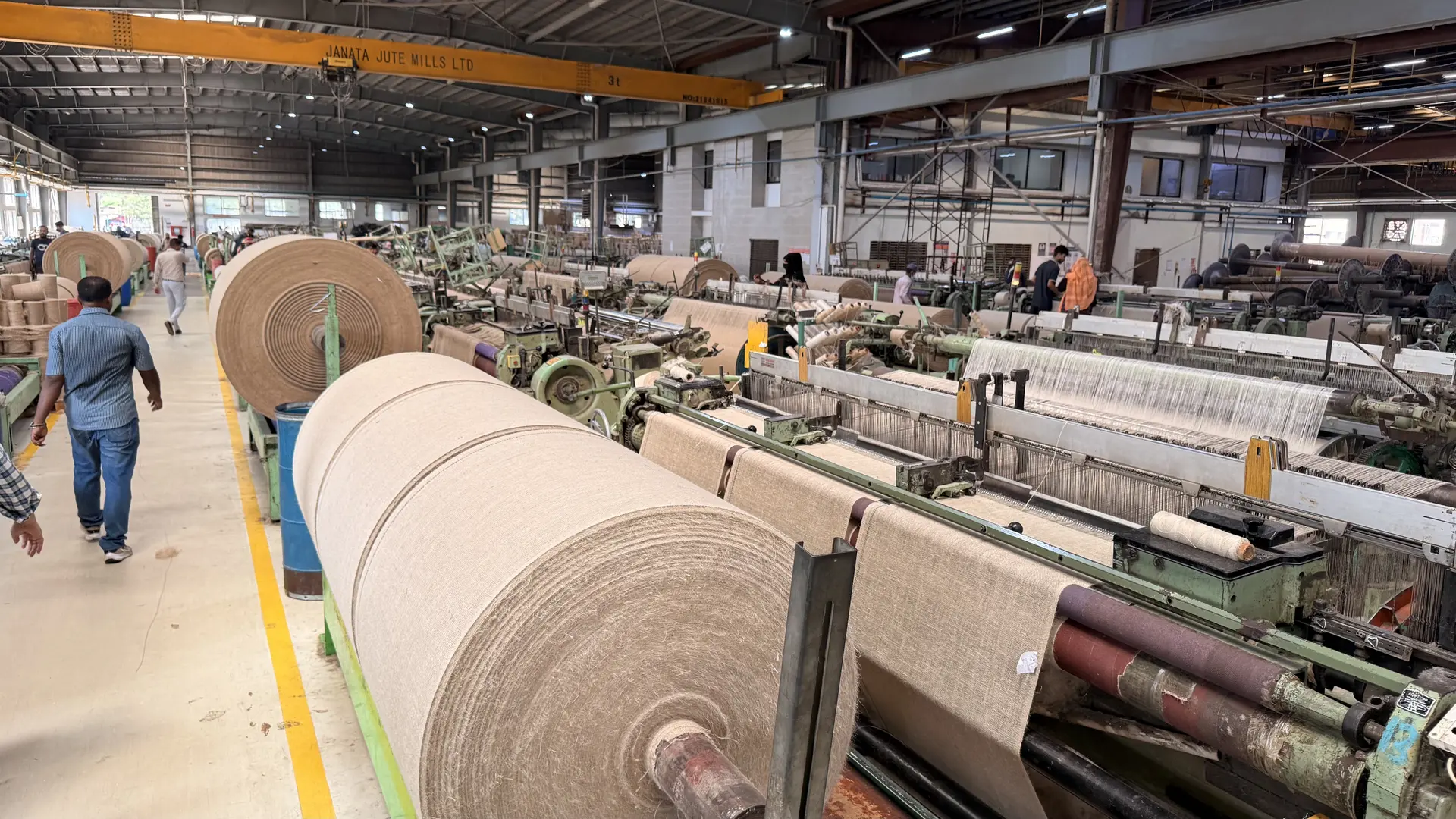
Sourced where it is consistently made.
Bag-construction tolerances, hessian porter counts, felt density bands, lamination film weights — each varies widely between mills, even within a single product category. We don't book to any mill that runs your spec; we book to the mill that runs it in volume.
For food-grade VOT bags, geotextile mesh and laminated fabric in particular, mill choice is the single biggest determinant of whether the landed product matches the approved swatch. Years of running these flows means we already know which mills hold which specs through monsoon season and which only deliver in winter runs.
03 — Sample
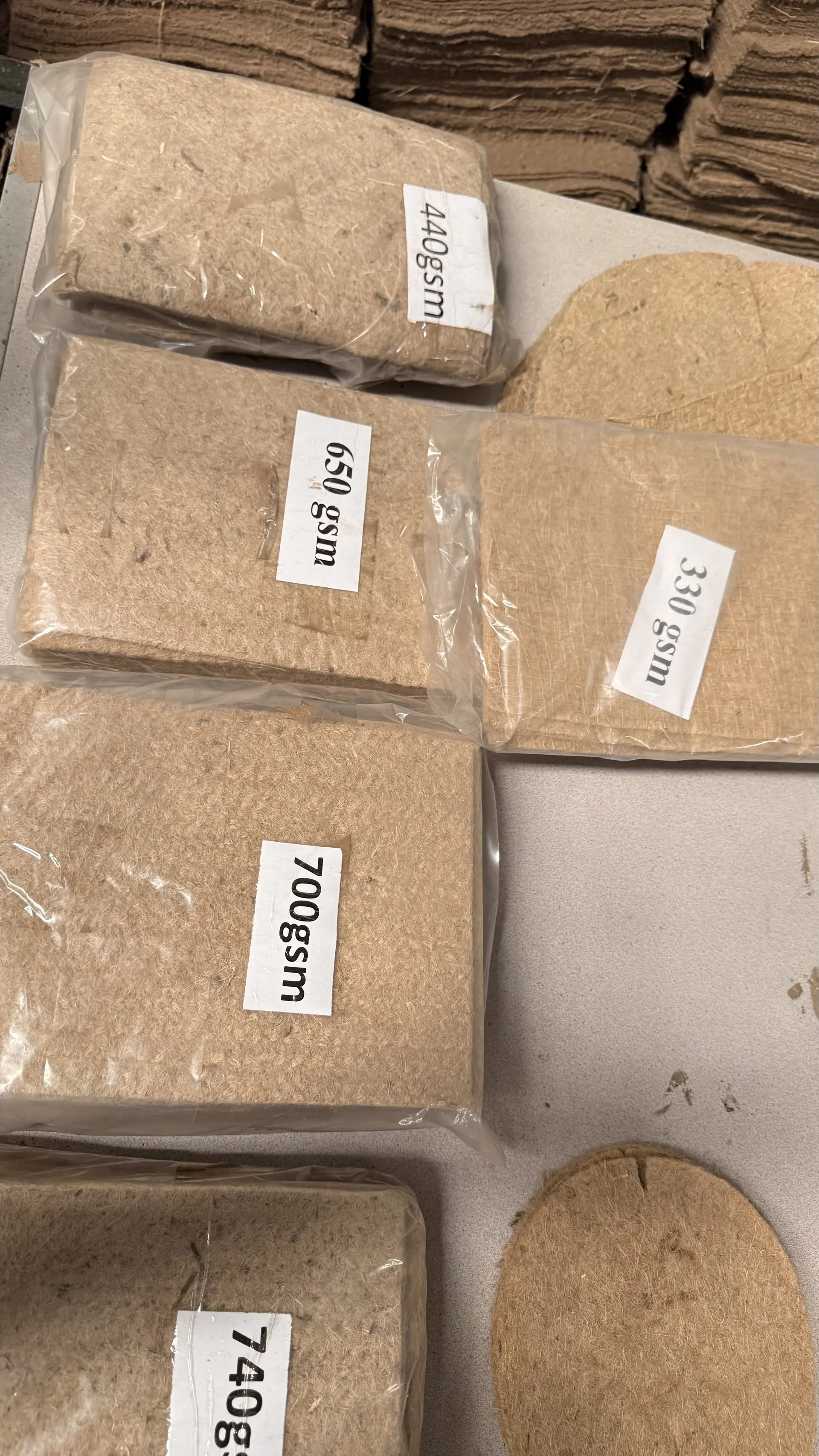
Physical swatches for final approval.
Once the mill is matched and the contract agreed, standard reference GSM swatches — 330, 440, 650, 700, 740 g/m² — are pulled from current-season rolls and shipped to your approval address for final sign-off. Custom weights on request.
Specification approved on a physical swatch — not an emailed spec sheet — eliminates the single most common cause of dispute on jute shipments. We do not skip this step.
04 — QA
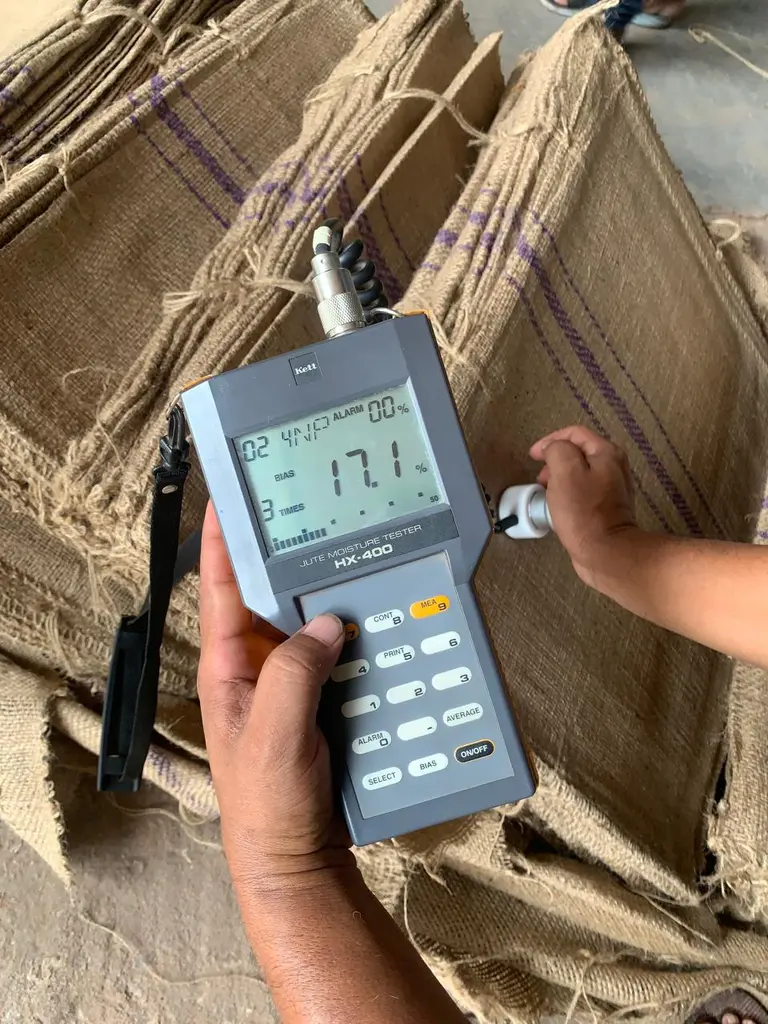
Tested before it leaves the warehouse.
Moisture, dimension, weight, weave check — every lot is sampled and tested before pressing. Moisture matters most: bales pressed wet rot or mould in container; bales pressed too dry crack on handling. We hold to the 14–17% target range industry-wide for raw fibre.
Grade certification accompanies the lot from this point forward, into the bale stencil and into the shipping documents.
05 — Ship
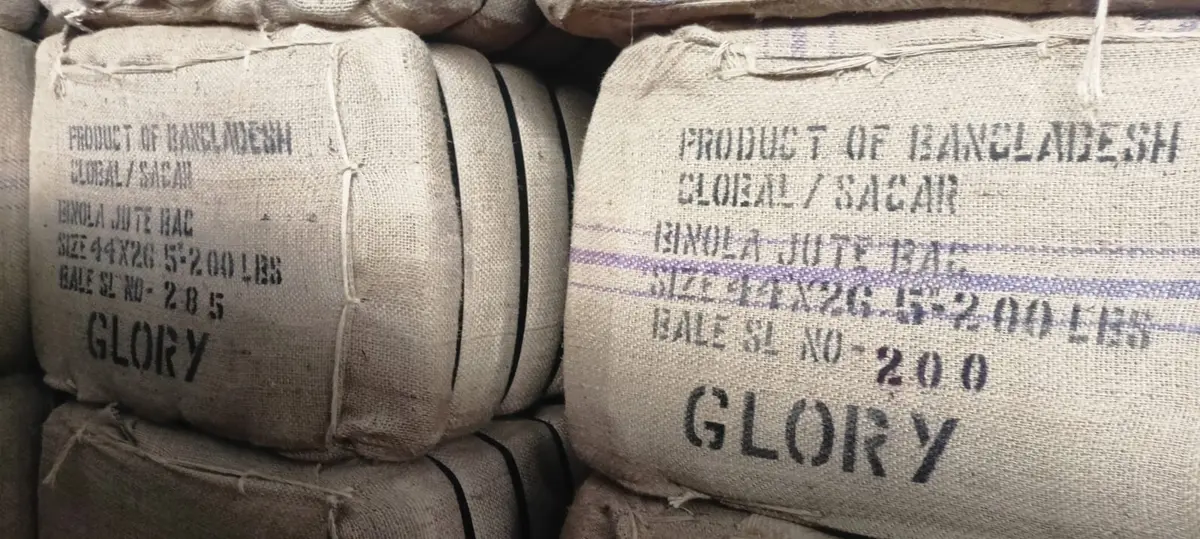
Container-stuffed, documented, despatched.
Pressed bales or shrink-wrapped rolls — packed to fit the container without dead space, bound, lined and labelled to the destination market's requirements. Stuffing is supervised, photographed and recorded; we book a renowned shipping line for minimum transit time, use the best available container, and line with Super Dry desiccant for moisture control.
Documentation set ships with the container: grade certificate, HS classification (pre-cleared with your customs broker), phytosanitary on request, commercial invoice, packing list, bill of lading. The brokerage step on your side has no surprises.
— behind the scenes
— documentation included
Every container ships with the paperwork.
No surprises on the brokerage side. Documentation is part of the price, not a line item.
Grade certificate
every lot
HS classification
pre-cleared with broker
Phytosanitary
on request
Commercial invoice
with bale stencil reference
Packing list
container-stuffing supervised
Bill of lading
every shipment

— Let's open the conversation
Source your next shipment.
Send a specification, a target quality, a quantity — or simply a question about what's possible. We respond within one business day, in clear English, with sample availability and an indicative quote.
- Office
- Global Jute Trading Ltd
43 Dilkusha C/A, 4th Floor
Dhaka 1000, Bangladesh - business@globaljutetrading.com
Replies within one business day - Telephone
- +880 1713 009508
WhatsApp available
© Global Jute Trading Ltd · Established 2000BJGEA · EPB · DCCI